The Helmholtz Sustainability Challenge
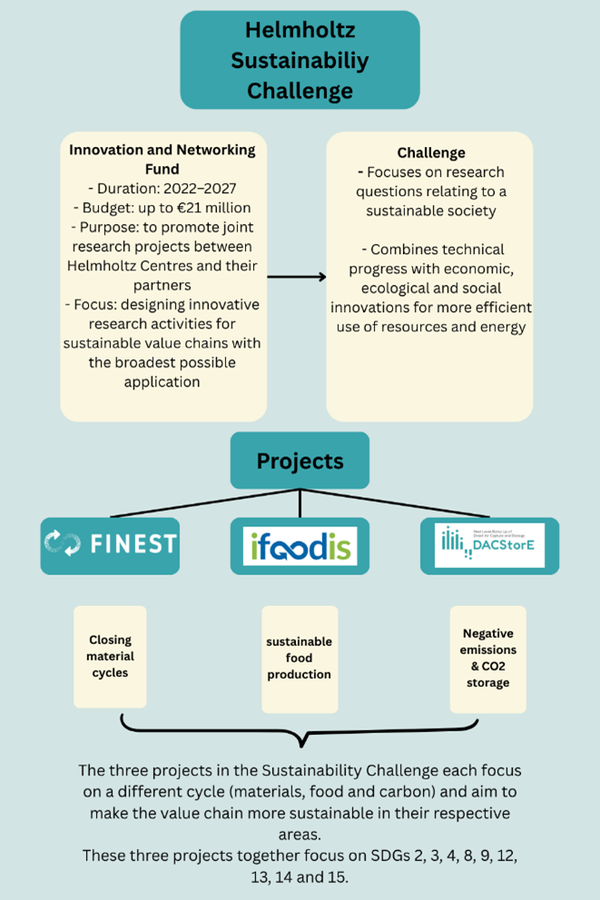
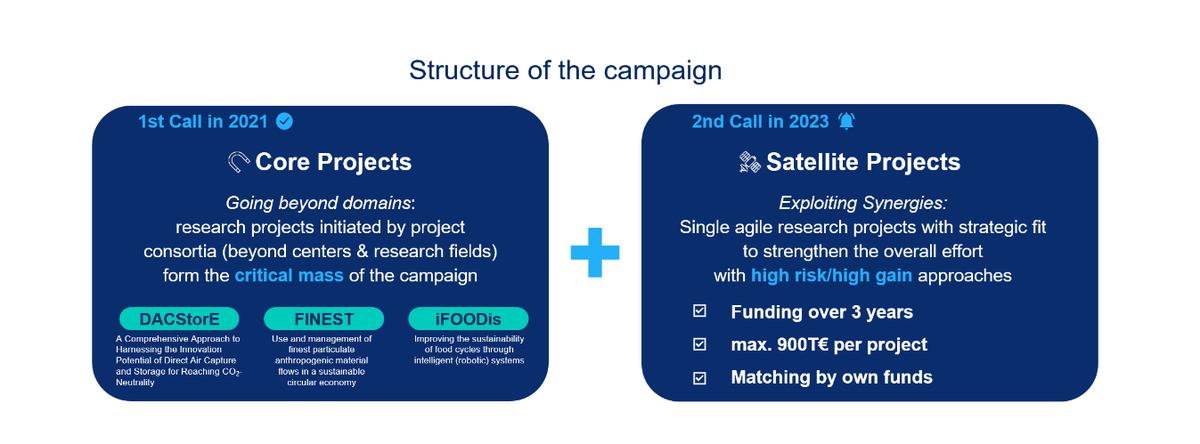
The Helmholtz Association's Innovation and Networking Fund (INF) is providing up to €21 million between 2022 and 2027 to support joint, cross-disciplinary research projects between Helmholtz Centers and their partners. The aim of the fund is to design and test innovative research activities that enable sustainable value chains and have the broadest possible application.
This fund enables the Helmholtz Sustainability Challenge as a research and campaign initiative. The challenge focuses on problem-oriented research questions that aim to contribute to more sustainable resources and energy use by linking technical progress with economic, ecological and social innovations. Projects within the framework of the Challenge:
- have a clear link to the UN Sustainable Development Goals (SDGs) and the EU Green Deal.
- develop unconventional, scalable innovations with high impact potential within three years.
- work in a transdisciplinary manner: Across departments, research fields and communities, utilizing existing expertise from the Helmholtz programs.
The three core projects:
- FINEST: Closing material cycles
- Problem: Fine dust and microplastics from industrial processes pollute the environment and disrupt cycles.
- Goal & approach: Develop optimized recycling and processing methods as well as pilot plants to return fine particles to value chains or convert them into harmless materials.
- More information: https://finest-project.de/
- iFOODis: Sustainable food production
- Problem: Growing demand and increased productivity are at odds with environmental pressures.
- Goal & approach: Use (semi-)autonomous robotics and sensor networks for continuous monitoring and efficiency improvement of agricultural systems; focus on socio-economic compatibility and resource efficiency.
- More information: https://ifoodis.com/de/home-2/
- DACStorE: Negative emissions
- Problem: Reforestation and land use changes alone are unlikely to be sufficient to meet the 2 °C goal.
- Goal & approach: Create the conditions for the sustainable, large-scale use of Direct Air Carbon Capture and Storage (DACCS) to support CO₂ neutrality and the transition to a defossilised economy.
Common thrust
The three projects each address different cycles (materials, food and carbon), are interdisciplinary, and contribute jointly to achieve several Sustainable Development Goals (SDGs, including 2, 3, 4, 8, 9, 12, 13, 14, 15). Within each project, research schools were built to strengthenresearch, education and transdisciplinary exchange.
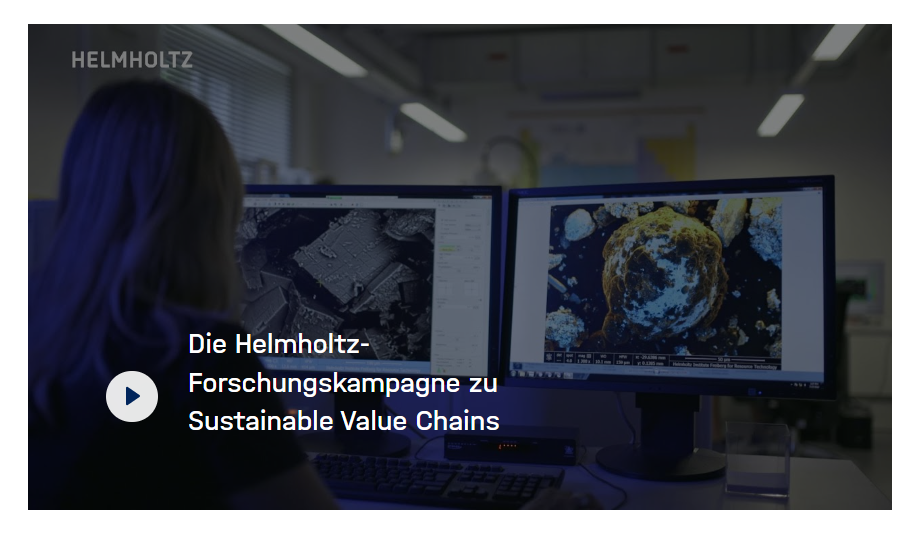
Video about the DACStorE project and the Helmholtz Sustainability Challenge
DACStorE is part of the Helmholtz Sustainability Challenge. The three core projects are presented in this video: